À voir et à faire à Surakarta

Activités, attractions et visites

Surakarta
Surakarta
Surakarta
Surakarta
At the museum no photos are allowed which is really unfortunate as it was well worth the visit and the guided tour is definitely not to be missed. In the museum there are even Batik made from the Dutch era which depicts stories like Little Red Riding Hood and Snow White!

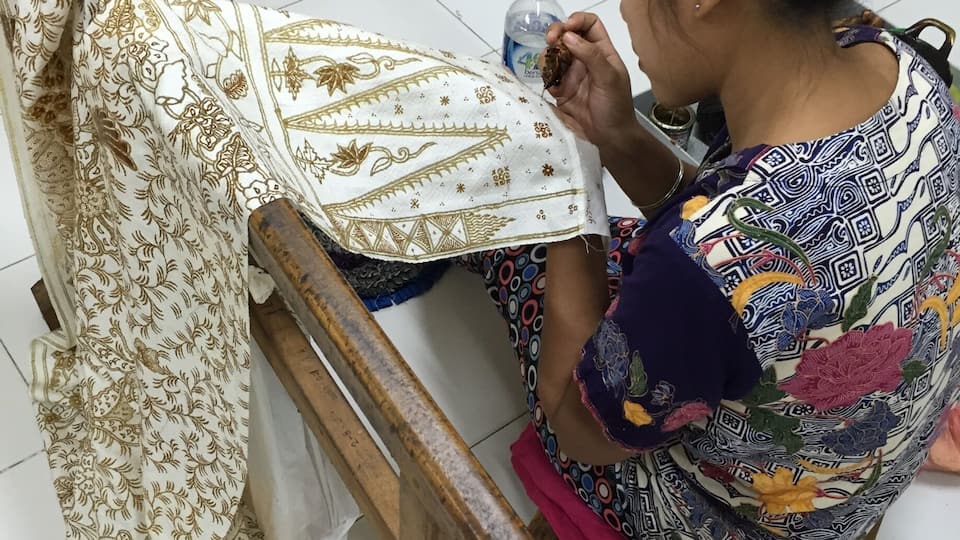
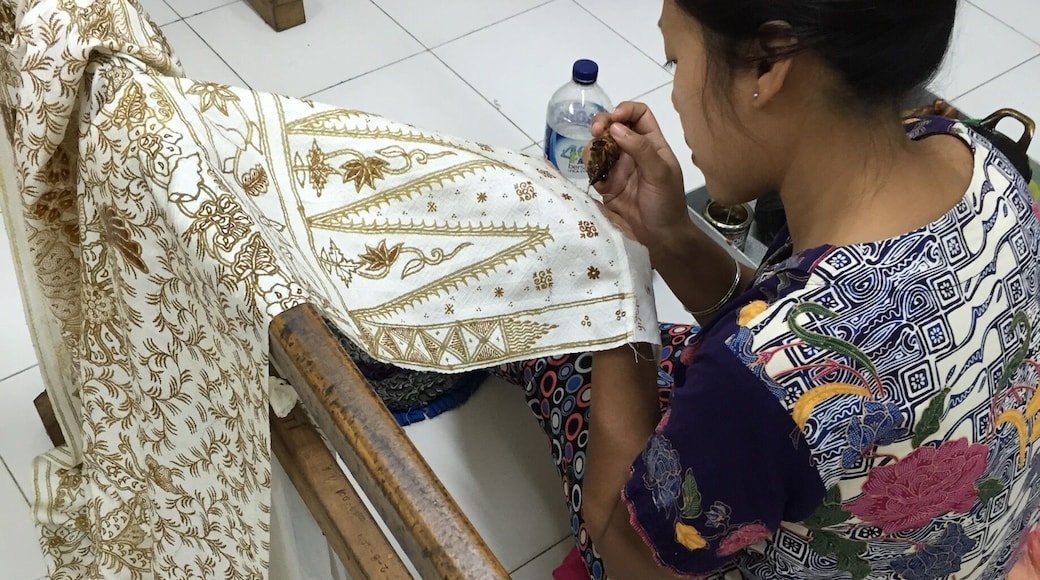
I enjoyed the tour v much and at the end of the tour we were brought to this room where the artisan were working on hand drawn batik.

Below is an excerpt from Wikipedia for anyone interested in learning more about the process of batik making.

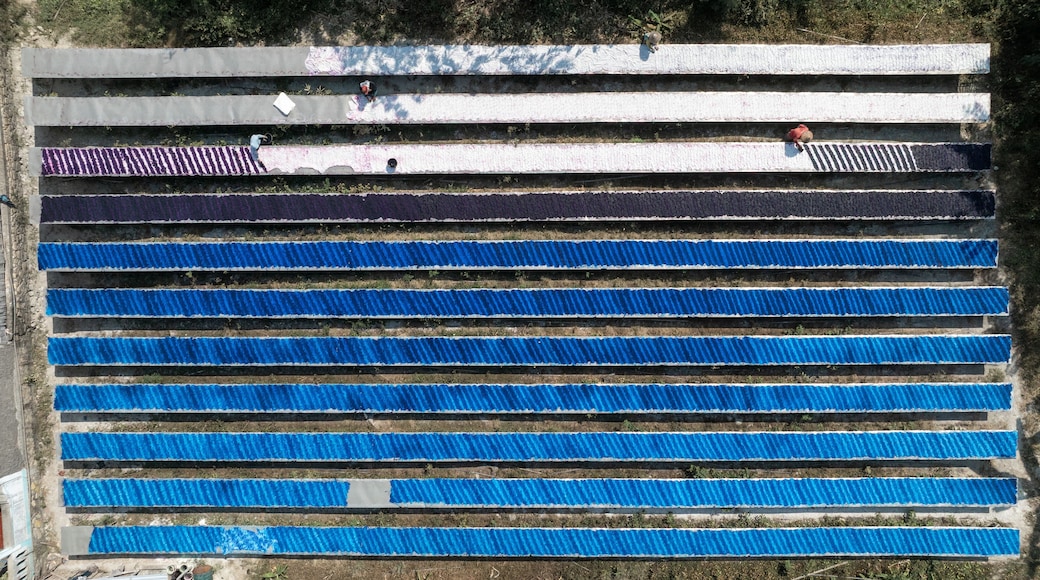
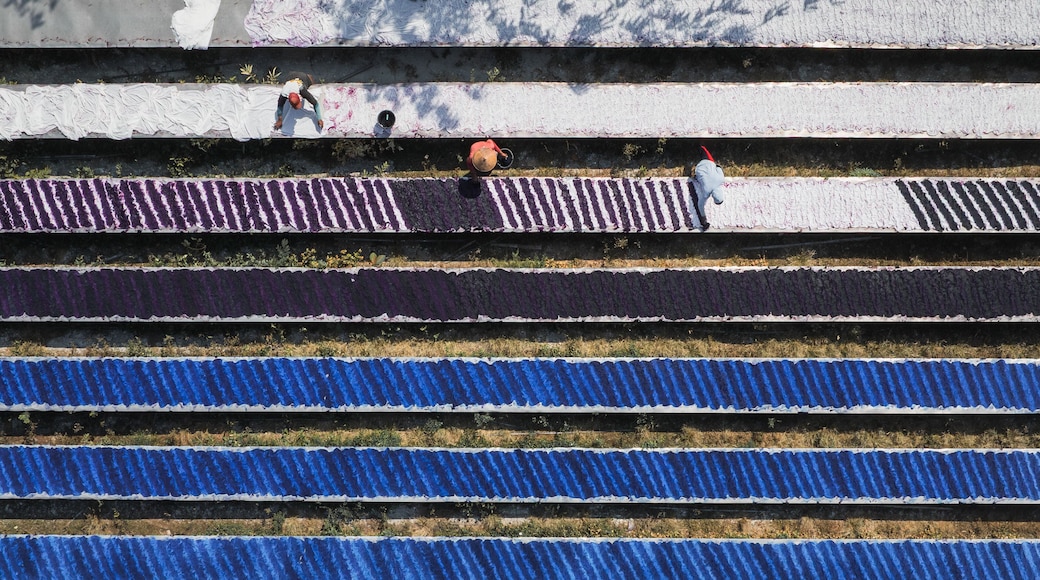
Firstly, a cloth is washed, soaked and beaten with a large mallet. Patterns are drawn with pencil and later redrawn using hot wax, usually made from a mixture of paraffin or bees wax, sometimes mixed with plant resins, which functions as a dye-resist. The wax can be applied with a variety of tools. A pen-like instrument called a canting (IPA: [tʃantiƋ], sometimes spelled with old Dutch orthography tjanting) is the most common. A canting is made from a small copper reservoir with a spout on a wooden handle. The reservoir holds the resist which flows through the spout, creating dots and lines as it moves. For larger patterns, a stiff brush may be used. Alternatively, a copper block stamp called a cap (IPA: [tʃap]; old spelling tjap) is used to cover large areas more efficiently.

After the cloth is dry, the resist is removed by scraping or boiling the cloth. The areas treated with resist keep their original color; when the resist is removed the contrast between the dyed and undyed areas forms the pattern. This process is repeated as many times as the number of colors desired.

The most traditional type of batik, called batik tulis (written batik), is drawn using only the canting. The cloth need to be drawn on both sides and dipped in a dye bath three to four times. The whole process may take up to a year; it yields considerably finer patterns than stamped batik.

Source: Wikipedia

Activités touristiques à Surakarta

Laissez Expedia vous aider à faire l'expérience de tout ce qu'il y a de mieux à voir et à faire à Surakarta ! Si vous planifiez un voyage à Surakarta, nous pouvons vous dresser une liste des meilleures attractions et visites touristiques qui s'offrent à vous. Que vous alliez à Surakarta pour de belles vacances en famille, une escapade romantique à deux ou un voyage d'affaires, nous vous faciliterons la tùche pour organiser un séjour inoubliable, fait sur mesure pour vous !

Sites les plus visités à Surakarta

Surakarta dĂ©borde de lieux touristiques incontournables et d'activitĂ©s diverses. Nous sommes lĂ  pour vous aider Ă  trouver votre hĂ©bergement Ă  Surakarta et faire de votre dĂ©couverte des environs un vĂ©ritable jeu d'enfant, grĂące Ă  nos guides vous recommandant oĂč aller, quoi voir et Ă  quel moment faire vos visites. Quelle que soit la durĂ©e de votre sĂ©jour, il est facile de trouver des sites intĂ©ressants Ă  visiter Ă  Surakarta, pour que vous ayez la garantie de profiter pleinement de vos vacances et de ne passer Ă  cĂŽtĂ© de rien. Laissez-nous gĂ©rer le programme des visites locales et partez l'esprit tranquille !

Si vous envisagez de visiter Surakarta, pensez Ă  jeter un Ɠil Ă  nos informations pratiques sur les attractions touristiques des environs. Vous pouvez parcourir les listes des choses Ă  voir et Ă  faire, en savoir plus sur les attractions les plus apprĂ©ciĂ©es et profiter d'une aide utile pour organiser les dĂ©tails de votre voyage. Expedia vous simplifie la vie pour dĂ©couvrir tous les plus beaux lieux touristiques Ă  Surakarta.

Attractions touristiques Ă  Surakarta

Surakarta a de quoi plaire Ă  tout le monde : que vous rĂȘviez de faire le plein d'activitĂ©s pendant vos vacances d'Ă©tĂ©, de rester lovĂ©s Ă  deux dans un petit nid douillet ou de vous laisser chouchouter Ă  l'occasion d'une douce escapade d'hiver, toute une ribambelle d'attractions vous attendent Ă  Surakarta pour rĂ©pondre Ă  vos envies. Avec Expedia, rĂ©server Ă  l'avance votre vol, votre hĂŽtel ou votre voiture de location est simple comme bonjour, et vous pouvez ainsi voyager sans tracas et explorer Ă  votre guise les charmes propres Ă  Surakarta.

Chercher ce qu'il y a de mieux à faire à Surakarta peut prendre un temps précieux. Heureusement, nous sommes là pour vous aider à planifier vos vacances en toute tranquillité. Envie de vivre des aventures en plein air, de goûter à la cuisine locale ou de découvrir les perles de la culture locale à Surakarta ? Découvrez les attractions que nous proposons à Surakarta et passez un séjour mémorable, quelle que soit la saison. Bon voyage !


  • find price illustration

    Découvrez les activités

    DĂ©couvrez des milliers d’expĂ©riences incluant des activitĂ©s, des attractions, des excursions d’une journĂ©e et les transferts disponibles.
  • calendar shield illustration

    Réservez facilement

    Évitez les files d’attente en rĂ©servant rapidement vos billets en ligne pour les principales attractions et bĂ©nĂ©ficiez d’une annulation gratuite pour de nombreuses activitĂ©s.
  • trophy illustration

    Faites-vous plaisir

    Les membres Ă©conomisent % ou plus lors de la rĂ©servation d’activitĂ©s.

Promo vacances annuelles

Membres : jusqu’à -40 % sur les hĂŽtels et locations. Planifiez votre voyage de l’annĂ©e et Ă©conomisez.

Lieux et endroits incontournables Ă  Surakarta

Zones de Surakarta

At the museum no photos are allowed which is really unfortunate as it was well worth the visit and the guided tour is definitely not to be missed. In the museum there are even Batik made from the Dutch era which depicts stories like Little Red Riding Hood and Snow White!

I enjoyed the tour v much and at the end of the tour we were brought to this room where the artisan were working on hand drawn batik.

Below is an excerpt from Wikipedia for anyone interested in learning more about the process of batik making.

Firstly, a cloth is washed, soaked and beaten with a large mallet. Patterns are drawn with pencil and later redrawn using hot wax, usually made from a mixture of paraffin or bees wax, sometimes mixed with plant resins, which functions as a dye-resist. The wax can be applied with a variety of tools. A pen-like instrument called a canting (IPA: [tʃantiƋ], sometimes spelled with old Dutch orthography tjanting) is the most common. A canting is made from a small copper reservoir with a spout on a wooden handle. The reservoir holds the resist which flows through the spout, creating dots and lines as it moves. For larger patterns, a stiff brush may be used. Alternatively, a copper block stamp called a cap (IPA: [tʃap]; old spelling tjap) is used to cover large areas more efficiently.

After the cloth is dry, the resist is removed by scraping or boiling the cloth. The areas treated with resist keep their original color; when the resist is removed the contrast between the dyed and undyed areas forms the pattern. This process is repeated as many times as the number of colors desired.

The most traditional type of batik, called batik tulis

Centre-ville de Solo

À Centre-ville de Solo, vous pourrez profiter des musĂ©es et des trĂ©sors zoologiques. Vous aimerez certainement prendre le temps de dĂ©couvrir les emblĂ©matiques Solo Paragon Lifestyle Mall (centre commercial) et Parc de Keprabon.

Centre-ville de Solo
At the museum no photos are allowed which is really unfortunate as it was well worth the visit and the guided tour is definitely not to be missed. In the museum there are even Batik made from the Dutch era which depicts stories like Little Red Riding Hood and Snow White!

I enjoyed the tour v much and at the end of the tour we were brought to this room where the artisan were working on hand drawn batik.

Below is an excerpt from Wikipedia for anyone interested in learning more about the process of batik making.

Firstly, a cloth is washed, soaked and beaten with a large mallet. Patterns are drawn with pencil and later redrawn using hot wax, usually made from a mixture of paraffin or bees wax, sometimes mixed with plant resins, which functions as a dye-resist. The wax can be applied with a variety of tools. A pen-like instrument called a canting (IPA: [tʃantiƋ], sometimes spelled with old Dutch orthography tjanting) is the most common. A canting is made from a small copper reservoir with a spout on a wooden handle. The reservoir holds the resist which flows through the spout, creating dots and lines as it moves. For larger patterns, a stiff brush may be used. Alternatively, a copper block stamp called a cap (IPA: [tʃap]; old spelling tjap) is used to cover large areas more efficiently.

After the cloth is dry, the resist is removed by scraping or boiling the cloth. The areas treated with resist keep their original color; when the resist is removed the contrast between the dyed and undyed areas forms the pattern. This process is repeated as many times as the number of colors desired.

The most traditional type of batik, called batik tulis

Banjarsari

Lorsque vous visitez Banjarsari, faites une halte Ă  certains endroits, comme Solo Paragon Lifestyle Mall (centre commercial) et Parc citadin Balekambang.

Banjarsari


À la recherche d’activitĂ©s intĂ©ressantes Ă  proximitĂ© ? Expedia vous aide Ă  trouver et Ă  rĂ©server des activitĂ©s et attractions prisĂ©es, oĂč que vous soyez.


Villes vers Surakarta