Guide de voyage: Izmir 2026

Izmir : idées de séjour, infos pratiques et culturelles

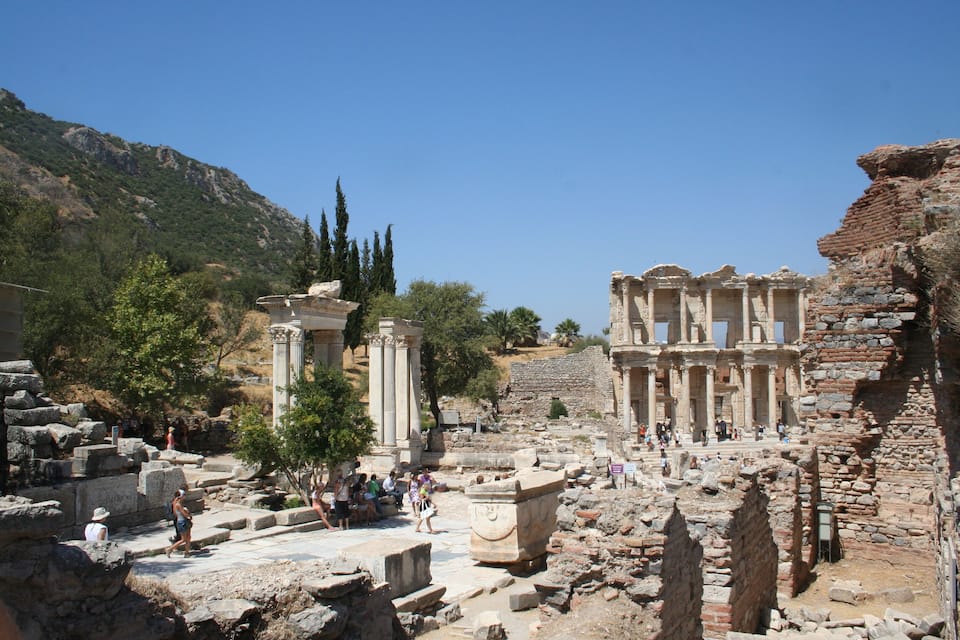
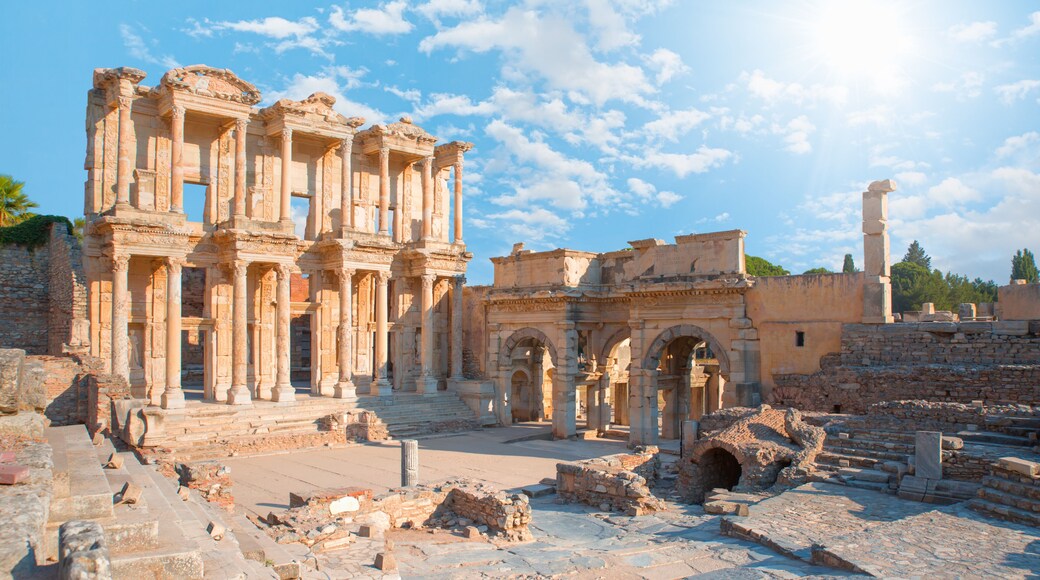
This library is one of the most beautiful structures in Ephesus. It was built in 117 A.D. It was a monumental tomb for Gaius Julius Celsus Polemaeanus, the governor of the province of Asia; from his son Galius Julius Aquila. The grave of Celsus was beneath the ground floor, across the entrance and there was a statue of Athena over it. Because Athena was the goddess of the wisdom.

The scrolls of the manuscripts were kept in cupboards in niches on the walls. There were double walls behind the bookcases to prevent the them from the extremes of temperature and humidity. The capacity of the library was more than 12,000 scrolls. It was the third richest library in ancient times after the Alexandra and Pergamum.

The facade of the library has two-stories, with Corinthian style columns on the ground floor and three entrances to the building. There are three windows openings in the upper story. They used an optical trick that the columns at the sides of the facade are shorter than those at the center, giving the illusion of the building being greater in size.

The statues in the niches of the columns today are the copies of the originals. The statues symbolize wisdom (Sophia), knowledge (Episteme), intelligence (Ennoia) and valor (Arete). These are the virtues of Celsus. The library was restored with the aid of the Austrian Archaeological Institute and  the originals of the statues were taken to Ephesus Museum in Vienna in 1910.

There was an auditorium ,which was for lectures or presentations between the library and the Marble Road, was built during the reign of the Emperor Hadrian.
#History Photo Contest
#ancient
#InStone
#Lifeatexpedia
#UNESCO World Heritage sites
#culture
This library is one of the most beautiful structures in Ephesus. It was built in 117 A.D. It was a monumental tomb for Gaius Julius Celsus Polemaeanus, the governor of the province of Asia; from his son Galius Julius Aquila. The grave of Celsus was beneath the ground floor, across the entrance and there was a statue of Athena over it. Because Athena was the goddess of the wisdom.

The scrolls of the manuscripts were kept in cupboards in niches on the walls. There were double walls behind the bookcases to prevent the them from the extremes of temperature and humidity. The capacity of the library was more than 12,000 scrolls. It was the third richest library in ancient times after the Alexandra and Pergamum.

The facade of the library has two-stories, with Corinthian style columns on the ground floor and three entrances to the building. There are three windows openings in the upper story. They used an optical trick that the columns at the sides of the facade are shorter than those at the center, giving the illusion of the building being greater in size.

The statues in the niches of the columns today are the copies of the originals. The statues symbolize wisdom (Sophia), knowledge (Episteme), intelligence (Ennoia) and valor (Arete). These are the virtues of Celsus. The library was restored with the aid of the Austrian Archaeological Institute and  the originals of the statues were taken to Ephesus Museum in Vienna in 1910.

There was an auditorium ,which was for lectures or presentations between the library and the Marble Road, was built during the reign of the Emperor Hadrian.
#History Photo Contest
#ancient
#InStone
#Lifeatexpedia
#UNESCO World Heritage sites
#culture
This is the most magnificent structure in Ephesus ancient city. The Great Theatre is located on the slope of Panayir Hill, opposite the Harbor Street, and easily seen when entering from the south entrance to Ephesus. It was first constructed in the Hellenistic Period, in the third century BC during the reign of Lysimachos, but then during the Roman Period, it was enlarged and formed its current style that is seen today.

It is the largest in Anatolia and has the capacity of 25,000 seats. The cavea has sixty six rows of seats, divided by two diazoma (walkway between seats) into three horizontal sections. There are three sections of seats. In the lower section, Marble pieces, used for restoration, and the Emperor's Box were found. The seats with backs ,made of marble, were reserved for important people. The audience entered from the upper cavea.

The stage building is three-storied and 18 meters high. The facade facing the audience was ornamented with relieves, columns with niches, windows and statues. There are five doors opening to the orchestra area, the middle one of which is wider than the rest. This enhanced the appearance of the stage, giving it a bigger, monumental look.

The theatre was used not only for concerts and plays, but also for religious, political and philosophical discussions and for gladiator and animal fights.

Best time to visit this magnificient archeological site is between march and may. Summer months are always with temperatures above 45°C.
#History Photo Contest
#Ancient
#InStone
#Turkey
#Lifeatexpedia
This was the capital of the Pergamon kingdom around 250 BC. Anthony took thousands of scrolls from this city and gave them to Cleopatra. It's a great ruin, in the small city of Bergama in Turkey. You cn get a cable car up to the ruins.
The library in the Ephesus ruins. If you get there early, and go to the other entrance, you can get the whole place to yourself for about 15 or so minutes which is very cool. Otherwise be prepared for thousands of other people swarming the place.
Ce joyau mal connu de la merÉgĂ©e renferme des trĂ©sors historiques et des expĂ©riences culturelles passionnantes.

La citĂ© millĂ©naire d’Izmir a longtemps jouĂ© un rĂŽle prĂ©pondĂ©rant dans l’histoire du commerce maritime. Connue sous le nom de Smyrna pendant la domination grecque, elle jouit d’un patrimoine aussi riche que variĂ©. En se promenant dans cette ville dynamique, on croise ainsi les cultures juive, levantine, grecque, armĂ©nienne et turque, comme en tĂ©moignent ses nombreux restaurants ethniques qui embaument les rues.

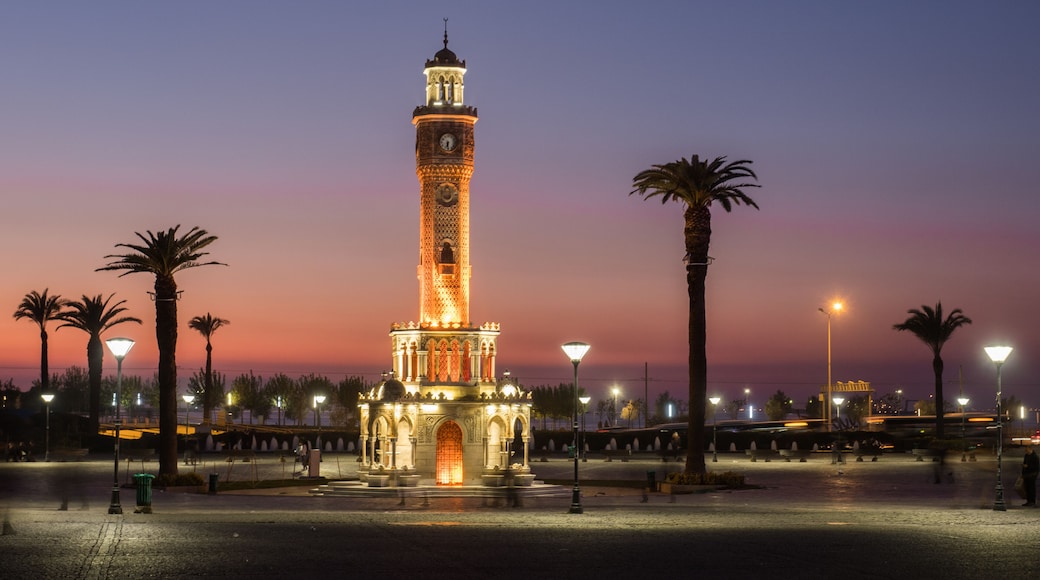
Parmi les lieux emblĂ©matiques d’Izmir, le marchĂ© de Kemeralti offre une multitude de restaurants, de cafĂ©s, de boutiques, d’ateliers artistiques, de mosquĂ©es et de synagogues. Son dĂ©dale de ruelles tortueuses vous mĂšnera Ă  la rencontre de succulentes dĂ©couvertes culinaires ou de charmantes cours reculĂ©es qui accueillaient autrefois les caravanes. SituĂ© Ă  deux pas de lĂ , le clocher de SaatKulesi est Ă  voir Ă©galement.

Vous pourrez ensuite explorer le KĂŒltĂŒrpark, un grand centre de loisirs moderne qui abrite notamment plusieurs musĂ©es, ainsi que le Lunapark, un parc d’attractions pour les enfants. Le MusĂ©e d’histoire et d’art prĂ©sente des artefacts provenant des fouilles de la ville, tandis que le MusĂ©e d’art et de la sculpture expose des Ɠuvres de divers artistes turcs et Ă©trangers. L’Ahmet Pirißtina Kent Arßivi ve MĂŒzesi retrace quant Ă  lui l’histoire de la ville depuis 3000ans av.J.-C. Enfin, situĂ© dans le quartier sud d’Izmir, le Smyrna Agora Antik Kenti propose de dĂ©couvrir un site archĂ©ologique en activitĂ©, connu pour ses grandes colonnes. La ville renferme par ailleurs d’autres musĂ©es intĂ©ressants dĂ©diĂ©s, par exemple, aux chemins de fer, Ă  l’automobile ou encore aux jouets.

Ne manquez pas Ă©galement d’aller faire un tour sur la promenade de Kordonboyu, qui s’étend sur plus d’un kilomĂštre et demi le long de la merÉgĂ©e. En fin de journĂ©e, le quartier animĂ© d’Alsancak, situĂ© Ă  l’extrĂ©mitĂ© nord de cet itinĂ©raire, sera l’occasion de dĂ©guster un savoureux dĂźner avant de profiter de la soirĂ©e dans l’un de ses nombreux bars et clubs.

Accessible en un court trajet d’une trentaine de minutes en direction du nord-ouest, le parc zoologique d’Izmir ravira petits et grands avec ses Ă©lĂ©phants, ses lĂ©muriens et ses perroquets. Plus bas, au sud-ouest du centre-ville, vous pourrez grimper Ă  bord du tĂ©lĂ©phĂ©rique d’Izmir afin de profiter d’une vue Ă  couper le souffle sur la forĂȘt verdoyante, sur les bĂątiments en pierre de la citĂ© et sur la merÉgĂ©e. On ne saurait trop vous conseiller de prendre le temps de vous balader dans le parc et de vous arrĂȘter un instant pour admirer la vue depuis le terminus.

La ville d’Izmir est dotĂ©e d’un aĂ©roport international, situĂ© Ă  25minutes de route seulement du centre-ville. N’hĂ©sitez donc pas Ă  programmer une visite de l’antique citĂ© grĂ©co-romaine d’ÉphĂšse, Ă  seulement 45minutes de route de lĂ !

Izmir : les plus belles villes à visiter

Izmir
Izmir
Mer, Shopping et Cafés
Venez visiter Izmir pour y découvrir des cafés de charme, des monuments marquants et des piÚces de théùtre.

Les bonnes raisons d’y aller

  • Place Konak
  • MarchĂ© de Kemeralti
  • Centre commercial Konak Pier
Selçuk
Selçuk
Historique, Petite ville et Musées
C'est l'heure des vacances ! Découvrez des sites chargés d'histoire, des cafés de charme et des monuments marquants dans le cadre paisible de Selçuk.

Les bonnes raisons d’y aller

  • Ruines d'ÉphĂšse
  • Maison de la Vierge Marie
  • Temple d'ArtĂ©mis
Foça
Foça
Ports de plaisance, Excursions et Historique
Foça vous attend ! Vous y trouverez un port qui invite Ă  la flĂąnerie, des sites chargĂ©s d'histoire, des plages de rĂȘve et bien plus encore.

Les bonnes raisons d’y aller

  • Port de plaisance de Foça
ÇeƟme
ÇeƟme
Plages, Mer et Ports de plaisance
Cette petite station balnéaire animée abrite un chùteau génois, une agréable promenade en bord de mer, de nombreux restaurants à prix raisonnable et des plages à proximité.
Urla
Urla
Universités et Historique
Urla vous attend : au programme, une vie estudiantine dynamique, des sites chargés d'histoire et bien plus !
Seferihisar
Seferihisar
Restauration, Loisirs et Ports de plaisance
Évadez-vous Ă  Seferihisar ! Un port qui invite Ă  la flĂąnerie, des divertissements passionnants et des plages de rĂȘve s'offrent Ă  vous.

Explorez un monde de voyages avec Expedia