
Maison entière
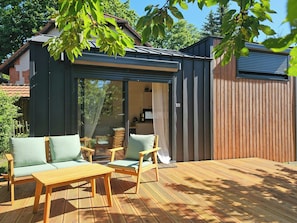
Vous êtes sous les cerisiers dans la région des lacs, dans une « tiny house ».
Choisissez des dates pour voir les prix
Galerie photos de l’hébergement Vous êtes sous les cerisiers dans la région des lacs, dans une « tiny house ».
Équipements populaires
- Cuisine
- Lave-linge
- Wi-Fi gratuit
- Climatisation
- Espace extérieur
- Parking disponible
Le prix actuel est de 182 €.
182 €
taxes et frais compris
26 oct. - 27 oct.
Options de chambre
Vérifiez la disponibilité pour ces dates.

Connectez-vous pour découvrir les réductions et les avantages dont vous pouvez bénéficier. Plus de récompenses pour plus d’aventures !
À propos du quartier

Elsterheide
Restaurants
- Restaurant Seestern9 min en voiture
- DerLeuchtTurm14 min à pied
- Dorfkrug Großkoschen4 min en voiture
- Lutki-Hütte8 min en voiture
- McDonald's10 min en voiture
À propos de cet hébergement
Vous êtes sous les cerisiers dans la région des lacs, dans une « tiny house ».
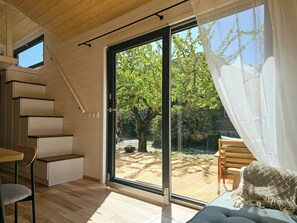
- This tiny house sits in the heart of the Lusatian Lake District, nestled beneath two old cherry trees in the front yard of a farmhouse dating back to 1790. In summer, you can help yourselves to the cherries right off the tree. Next door is the village’s old heritage museum.
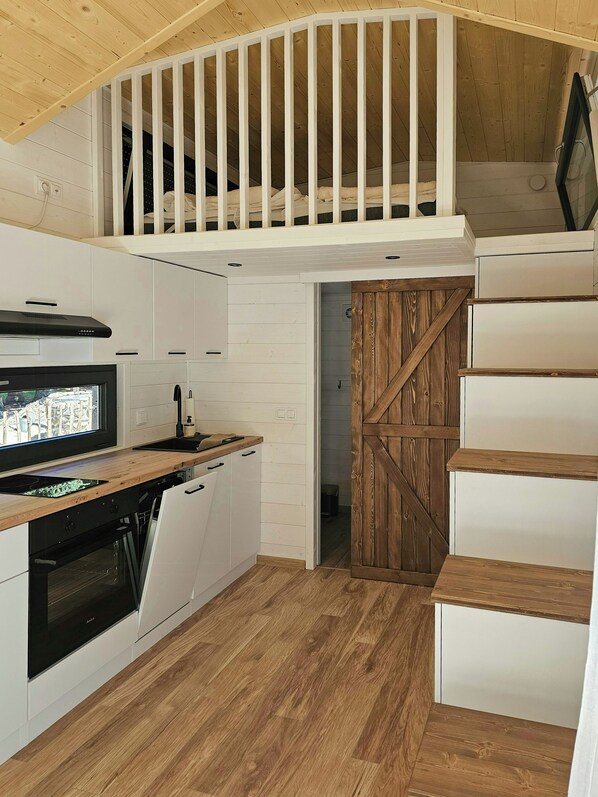
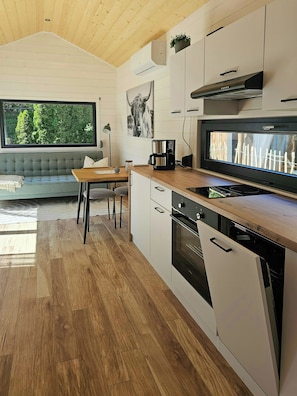
We've carefully planned every centimetre of the tiny house: cookware, a fridge with a freezer compartment, a small washing machine with a drying rack and storage space under the stairs for your luggage. We provide small coffee packets free of charge, and you can also buy eggs and honey on-site.
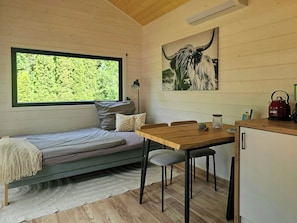
The entire front garden's at your disposal and leads to a field where you can watch chickens and two Highland cattle. There's a lockable garage for bicycles as well as a private parking space. The patio under the cherry trees invites you to linger.
Geierswalder See, with its striking lighthouse, is about 1 km away on foot. By bike, you can explore the extensive network of bike paths around the five large lakes. The Lusatian Lake District combines nature and water with the region’s industrial history. Discover observation towers, former open-pit mining areas, and special places that tell the story of lignite mining.
The European Union and the Free State of Saxony supported the construction of the tiny house as part of the EU “Regional Growth” funding programme.